

Does finasteride lower testosterone? In most men, no — it does the opposite. Serum testosterone typically rises a little, by roughly 10–15%, while dihydrotestosterone (DHT), the hormone actually shrinking your hair follicles, falls by about 70%. That split surprises almost everyone who asks us about it at the clinic, so it’s worth unpacking properly.
So, does finasteride lower testosterone?
Finasteride blocks an enzyme called 5-alpha-reductase (type II), which your body uses to convert testosterone into DHT. Shut down that conversion and two things happen at once. DHT plummets — studies cited in the NCBI’s clinical summary of finasteride put the drop at around 65–70% on the standard 1 mg dose. And the testosterone that would have been converted stays in circulation, which is why total testosterone tends to tick modestly upward instead of down.
So if you’ve been avoiding the medication because you assumed it would tank your levels, the blood work says otherwise. The more interesting question is what losing that much DHT actually means for you.
What DHT does — and why blocking it helps your hairline
DHT is a far more potent androgen than testosterone. It binds the same receptor about three times more tightly and hangs on longer. During puberty it drives beard growth, a deeper voice, and genital development. In adulthood, its job description shrinks: mostly prostate maintenance, body hair, and — for men with the genetic sensitivity — the slow miniaturization of scalp follicles we call male pattern baldness.
That’s the trade finasteride offers. You give up most of your DHT, which your adult body needs less than you’d think, and in exchange the main driver of androgenic hair loss largely goes quiet. In the original clinical trials, roughly two-thirds of men regrew some hair over two years and around 90% stopped losing ground. If shedding is your concern, it’s also worth reading our guide on whether TRT causes hair loss, because the mechanism is exactly the same hormone.
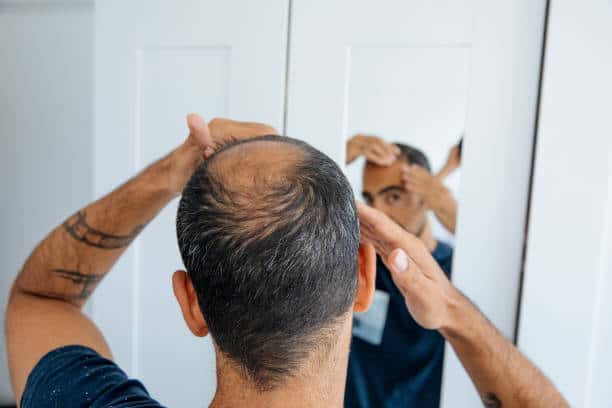
Does finasteride lower testosterone in men on TRT?
Here’s where it gets practical for our patients. Men on testosterone replacement therapy raise their total testosterone — and since DHT is made from testosterone, more substrate means more DHT. That’s why some men notice faster shedding in the first months of therapy. Adding finasteride blunts that DHT surge without undoing the benefits of treatment, because muscle, mood, libido, and energy respond mainly to testosterone itself, not DHT.
The answer to “does finasteride lower testosterone on TRT” is the same as off TRT: it doesn’t. Your injected or oral dose still arrives; it just gets converted to DHT at a much lower rate. We routinely see men run both together, monitored through a standard hormone blood test panel every few months.
Finasteride side effects: what the trials actually show
No honest article skips this part. In the Propecia registration trials, sexual side effects — lower libido, erectile difficulty, reduced ejaculate volume — showed up in about 3.8% of men on finasteride versus 2.1% on placebo. So the drug-attributable rate sits somewhere near 1–2%, and most cases resolved with continued use or after stopping. Mayo Clinic’s monograph on finasteride lists the same profile.
A smaller group of men report symptoms that persist after discontinuing, often called post-finasteride syndrome. The research on it is genuinely contested — prevalence estimates vary wildly and controlled data is thin. Our read: the risk appears low, but it isn’t zero, and anyone with a history of depression or existing sexual dysfunction should raise that before starting. If your libido was already flagging, check the broader signs of low testosterone first — treating the wrong problem helps nobody.
How to track your testosterone while taking finasteride
Numbers beat guesswork. Before starting, get a baseline: total testosterone, DHT if available, estradiol, and PSA. One quirk worth knowing — finasteride roughly halves PSA readings, so doctors mentally double the value when screening. After eight to twelve weeks, retest. Expect total testosterone flat or slightly up, DHT down sharply, and estradiol occasionally a touch higher since spare testosterone can aromatize; we cover that pathway in our piece on estrogen on TRT.
And remember that a total testosterone figure only tells half the story. SHBG determines how much of it is usable, which is why we usually check free vs total testosterone together rather than either alone.
The bottom line for your hormones and your hairline
Asked plainly — does finasteride lower testosterone? — the evidence says no. It lowers DHT, leaves testosterone intact or slightly higher, protects hair in about nine out of ten men, and carries a small but real side-effect risk that deserves a proper conversation, not a shrug.
If you’re weighing finasteride alongside TRT, or your hairline has you searching at 2 a.m., come talk it through. Boost Health Clinic offers physician-supervised hair loss treatment in Jakarta and Bali, with baseline labs done the same visit — so you decide with your own numbers in hand.
Testosterone replacement therapy near you: TRT in Bali · TRT in Jakarta