
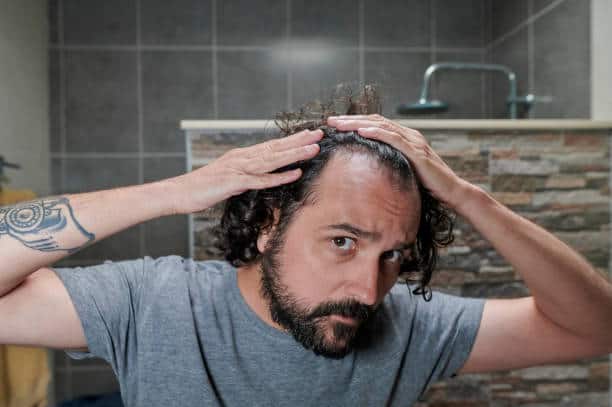
Finasteride and testosterone have a stranger relationship than most men assume. The drug that protects your hairline doesn’t lower testosterone at all — it blocks the enzyme that converts testosterone into dihydrotestosterone (DHT), the far more potent androgen that actually shrinks hair follicles. On finasteride, serum DHT falls by roughly 70% while total testosterone typically drifts up around 10–15%.
That one mechanism explains nearly everything about the drug: its benefits, its side effects, and the questions we field at Boost Health Clinic from men taking it alongside hormone therapy. Here’s what the research shows.
What finasteride does inside your body
The story of finasteride and testosterone starts with a single enzyme. Finasteride inhibits 5-alpha-reductase type II, which is concentrated in the scalp, prostate, and liver, and whose job is converting testosterone into DHT — an androgen several times more potent at the receptor. Block the enzyme and serum DHT drops about 70%, with scalp DHT falling by more than 60%, according to the NIH’s clinical pharmacology summary.
The drug comes in two strengths: 5 mg (Proscar), approved in 1992 for enlarged prostate, and 1 mg (Propecia), approved in 1997 for male pattern baldness. Both are cheap generics now, and the 1 mg dose is the backbone of most medical hair loss treatment plans, often paired with topical minoxidil.
Finasteride and testosterone: what the numbers show
Here’s the part that surprises people. Because less testosterone gets converted to DHT, more of it stays in circulation. Clinical studies consistently show total testosterone rising roughly 10–15% in men taking finasteride, with free testosterone following a similar pattern. For nearly everyone, levels stay inside the normal reference range — the body’s feedback loop keeps things in check. If those lab terms are fuzzy, our guide to free vs total testosterone breaks them down.
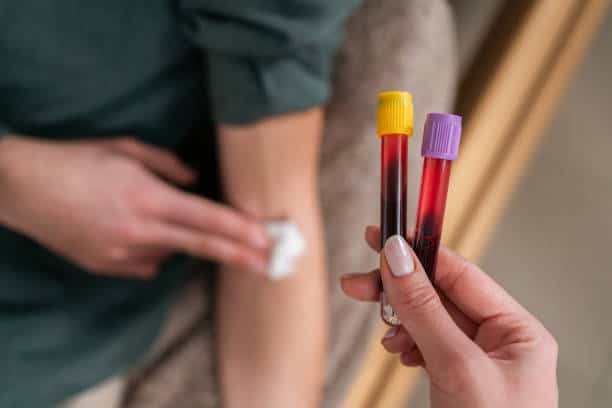
The practical takeaway: finasteride and testosterone levels are not in conflict. Men worried the tablet will crash their T are watching the wrong hormone. The real change happens downstream, in DHT.
Why DHT — not testosterone — drives hair loss
In men with the genetic susceptibility, DHT binds to receptors in scalp follicles and slowly miniaturizes them. Each growth cycle produces a thinner, shorter hair, until the follicle barely produces one at all. Testosterone contributes to this only indirectly, as the raw material DHT is made from.
DHT does useful work elsewhere — it drives beard and body hair, and it stimulates prostate tissue — which is exactly why a drug that suppresses it helps both bald spots and enlarged prostates. It’s also why raising testosterone can accelerate shedding in predisposed men: more substrate, more DHT. We’ve unpacked that in can TRT cause hair loss.
How common are finasteride’s sexual side effects?
This is the question behind most hesitation, so let’s use real numbers. In the original 1 mg clinical trials, 3.8% of men reported a sexual side effect — reduced libido, erectile difficulty, or lower ejaculate volume — compared with 2.1% of men on placebo. The true drug-attributable rate, in other words, sits somewhere under 2%, and Mayo Clinic classifies these effects as uncommon. For most men who get them, they fade with continued use or after stopping.
A small group reports symptoms that persist after discontinuation, often called post-finasteride syndrome. Researchers still debate how much is pharmacology and how much is expectation, since men warned about sexual side effects report them far more often in studies. The honest answer is that the risk is real but small. And if your libido dips, it’s worth checking whether the drug is even the culprit: test your testosterone levels first, because the signs of low testosterone overlap heavily with what gets blamed on finasteride.
Can you take finasteride and testosterone therapy together?
Yes — and at our clinic it’s one of the more common pairings. Men starting testosterone replacement therapy sometimes notice extra shedding in the first months, because lifting testosterone lifts DHT with it. Adding 1 mg finasteride blunts that scalp DHT surge while leaving the therapy’s main benefits — muscle, energy, mood, libido — largely intact, since those run primarily on testosterone itself.
Two monitoring notes for anyone combining them. Finasteride roughly halves PSA readings, so your doctor needs to know you’re on it before interpreting prostate labs — more on that in TRT and prostate health. It also leaves aromatase untouched, the enzyme that turns testosterone into estrogen, so your estradiol behaves the same with or without it. Full prescribing details are on MedlinePlus.
The bottom line for men weighing finasteride
Finasteride and testosterone coexist just fine. The tablet trades a steep drop in DHT for hairline protection, nudges testosterone slightly upward, and causes lasting sexual side effects in only a small minority. Whether that trade is worth it depends on your genetics, your baseline hormones, and how much the mirror bothers you.
If you’re weighing it — or already on TRT and seeing more hair in the drain than you’d like — start with data, not guesswork. The doctors at Boost Health Clinic in Jakarta and Bali can run a full hormone panel and build a plan that protects your hair and your levels at the same time.
Testosterone replacement therapy near you: TRT in Bali · TRT in Jakarta