

Gynecomastia from TRT tends to announce itself the same way for every man it happens to: a tender, marble-sized lump directly behind the nipple, found in the shower, quietly ignored for a few weeks. It almost never resolves on its own. But the biology behind it is well understood, and caught in the first few months, the tissue is still soft, still glandular, and still responds to treatment.
Rough clinic experience and the published literature put the rate somewhere in the single digits for men on well-monitored therapy. The men who develop gynecomastia from TRT are rarely random. They’re usually carrying more body fat, running a higher dose than they need, or — most often — nobody has checked their estradiol since the day they started.
What actually causes gynecomastia from TRT
Testosterone doesn’t grow breast tissue. Estradiol does. An enzyme called aromatase, concentrated in fat cells, converts a slice of your circulating testosterone into estradiol, and that conversion is not a malfunction — men need estradiol for bone density, libido, mood and blood lipids. Raise the raw material, though, and you raise the product along with it.
The number on your estradiol result matters less than the balance between estrogen and androgen signalling inside the breast itself, which carries receptors for both. When estrogen signalling pulls ahead locally, glandular tissue proliferates. Reviews of gynecomastia consistently describe this imbalance, not absolute hormone levels, as the driver. It explains something that confuses a lot of men: gynecomastia from TRT can develop in someone whose total testosterone looks superb on paper. His estradiol simply climbed faster than his free testosterone did. We unpack that dynamic further in our piece on why TRT raises estrogen and how to manage it.
Why some men on TRT are far more susceptible
Body fat is the single biggest variable in who develops gynecomastia from TRT. Aromatase lives in adipose tissue, so a man at 30 percent body fat converts substantially more testosterone to estradiol than a lean man on an identical dose. Weight loss alone often drops estradiol without touching the prescription.
Dose and delivery matter next. Large, infrequent injections create a sharp peak in the first 48 hours, and aromatase happily works through that spike — one reason we generally split doses rather than stack them, as covered in our look at once versus twice weekly injection frequency.
Then there’s binding. A man with low SHBG carries more free, biologically available hormone at any given total level, which shifts the whole equation; our explainer on SHBG and testosterone gets into why two men with identical lab totals can feel and respond completely differently. Alcohol, liver strain, certain blood pressure medications and cannabis all tilt things further.
The window where gynecomastia from TRT is still reversible
Breast tissue changes in stages. For the first three to six months the growth is inflammatory and glandular — swollen, sore, sensitive to touch. Correct the hormonal picture during that phase and it frequently shrinks back. After roughly a year, the tissue has laid down fibrous collagen, and fibrous tissue does not respond to hormone adjustment. At that point the lump is structural.
Pain is the useful signal here, and it’s counterintuitive: soreness means the tissue is active, which means it’s treatable. A painless, rubbery disc that has been there for two years is a different problem. Any lump that is hard, fixed, one-sided, or accompanied by nipple discharge deserves an urgent exam rather than a hormone tweak, because male breast cancer, while rare, presents that way.
How to lower the risk without crashing your estrogen
Most cases of gynecomastia from TRT are preventable, and the fix is unglamorous. The most common mistake we see isn’t ignoring estradiol — it’s over-correcting it. Men arrive having self-prescribed an aromatase inhibitor from an online forum, and now they have joint pain, flat libido, poor sleep and a lipid panel heading the wrong way. Estradiol that’s too low is its own clinical problem, which we cover in why estradiol and testosterone have to stay in balance.
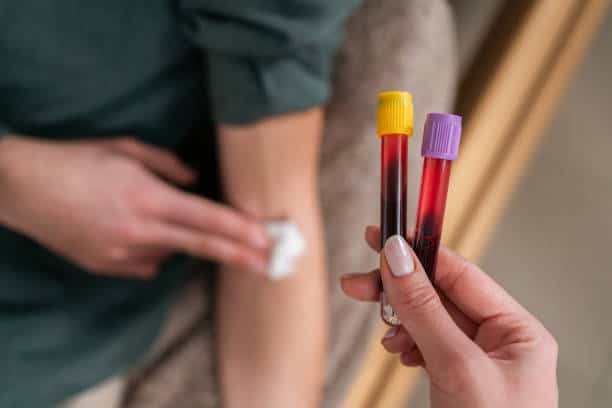
A saner sequence: baseline and follow-up estradiol on a sensitive assay, taken alongside your trough testosterone, through a proper men’s hormone blood test. Then adjust the dose before adding a drug. Then address body fat. Aromatase inhibitors have a genuine role, but at low doses, with monitoring, and rarely as the first move. For early glandular growth, a selective estrogen receptor modulator such as tamoxifen or clomiphene blocks the receptor at the breast without flattening estradiol everywhere else — the same drug class we discuss in our article on combining clomid with testosterone. All of this belongs in a supervised testosterone replacement therapy protocol, not a group chat.
When surgery becomes the honest answer
Once gynecomastia from TRT has turned fibrous, no medication removes it. Endocrine reviews are blunt about this: in men with long-standing gynecomastia, testosterone treatment usually fails to produce regression. Surgical excision of the glandular disc, often with liposuction of the surrounding fat, is the definitive fix, and it’s a straightforward day procedure.
Worth knowing: stopping therapy at that point doesn’t undo the tissue either, and it hands back every symptom that sent you to the clinic in the first place — a trade we walk through in what happens when you stop TRT. The better answer is almost always to keep the therapy and fix the variable that caused the problem.
If you’ve felt something change behind the nipple, get it looked at while it’s still sore — that’s the phase where gynecomastia from TRT is cheapest and easiest to reverse. The team at Boost Health Clinic can run the right labs, read them properly, and adjust your protocol before anyone reaches for a scalpel.
Testosterone replacement therapy near you: TRT in Bali · TRT in Jakarta