
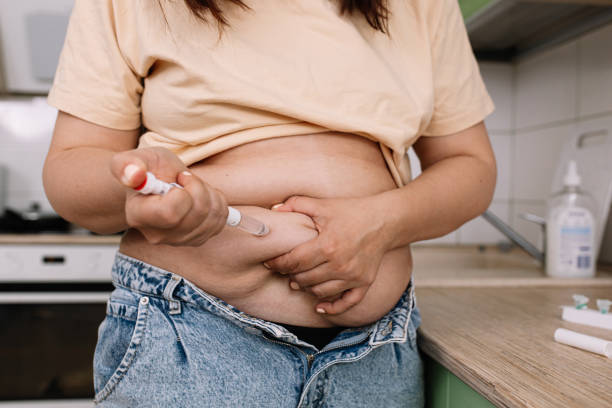
The liraglutide vs semaglutide question has a surprisingly blunt answer: in the only head-to-head trial that matters, semaglutide produced roughly two and a half times the weight loss of liraglutide. Yet liraglutide is still prescribed every day, and for some men in Indonesia it’s the more practical choice. Here’s what separates the two drugs, and when the older one still earns its place.
Liraglutide vs semaglutide: the 68-week trial that settled the argument
Both drugs come from the same company and work on the same receptor. So in 2022, researchers ran them against each other directly. The STEP 8 trial, published in JAMA, randomised 338 adults with obesity to either semaglutide 2.4 mg once a week or liraglutide 3.0 mg once a day, on top of the same diet and exercise counselling.
After 68 weeks, the semaglutide group had lost 15.8% of their starting body weight. The liraglutide group had lost 6.4%. That’s a gap of more than nine percentage points, and it’s the single most important fact in any liraglutide vs semaglutide debate. For a 100 kg man, it’s the difference between finishing at 84 kg or 94 kg.
The proportions tell the same story. Around 87% of people on semaglutide lost at least 5% of their body weight, compared with 58% on liraglutide. And more than half of the semaglutide group lost 15% or more, a threshold only 12% of the liraglutide group reached.
One number cut the other way, and it’s worth remembering. More people quit liraglutide because of side effects (12.6%) than quit semaglutide (3.2%). Part of that is the daily injection. Part of it, the researchers suspected, was that the slower weekly climb of semaglutide is simply easier on the gut.
Same receptor, very different half-lives
Both are GLP-1 receptor agonists. They mimic a gut hormone that tells your brain you’re full, slows stomach emptying, and nudges the pancreas to release insulin when blood sugar rises. If you want the mechanism in detail, we’ve covered how semaglutide works for weight loss separately.
The practical difference in liraglutide vs semaglutide is chemistry. Liraglutide has a half-life of about 13 hours, which is why it needs a daily injection and why its appetite effect can fade slightly overnight. Semaglutide was engineered with a different fatty-acid side chain that binds tightly to albumin in the blood, stretching its half-life to roughly a week. Steadier drug levels mean steadier appetite suppression, and that consistency is most of the reason the weight-loss numbers diverge.
Liraglutide is the older molecule. It reached the market for type 2 diabetes in 2010 (as Victoza) and for weight management in 2014 (as Saxenda). Semaglutide followed in 2017 (Ozempic) and 2021 (Wegovy), with an oral tablet version, Rybelsus, also available for diabetes.

Where liraglutide vs semaglutide gets interesting: cost and supply
If semaglutide wins on results, why does the liraglutide vs semaglutide choice still come up in consultations? Two reasons: money and availability.
Liraglutide’s patents have expired in most markets. Generic versions of Victoza launched in the United States in 2024 and generic Saxenda followed, and generic liraglutide is now reaching Asian markets too. Semaglutide remains under patent in most countries, and demand for Ozempic and Wegovy has outstripped supply repeatedly since 2022. In Indonesia, Saxenda has held BPOM registration for weight management for years, while access to semaglutide has been patchy and pricing far higher. We see men at the clinic who’ve spent months trying to source Ozempic through unreliable channels when a registered liraglutide pen was available the whole time.
For someone who needs to lose 8 to 10 kg rather than 30, a 6% result from liraglutide may be enough, and it may cost a fraction of the alternative. If you’re weighing the whole GLP-1 family rather than just these two, our Mounjaro vs Ozempic vs Wegovy comparison fills in the tirzepatide side of the picture.
Side effects: mostly the same list, different intensity
On side effects, liraglutide vs semaglutide is close to a draw: the profiles overlap almost completely, because the mechanism is identical. Nausea, constipation, diarrhoea and reflux top both lists, and they cluster in the first weeks after each dose increase. In STEP 8, gastrointestinal complaints affected 84% of the semaglutide group and 83% of the liraglutide group. Semaglutide’s effects are slightly more likely to be moderate rather than mild, which fits a more potent drug.
Both carry the same boxed warning about thyroid C-cell tumours seen in rodents, and both are avoided in men with a personal or family history of medullary thyroid cancer. Both can trigger gallbladder problems, and both have been linked to pancreatitis in rare cases. The original SCALE trial of liraglutide 3.0 mg in the New England Journal of Medicine documented the same pattern back in 2015.
Two concerns apply equally and deserve their own reading: the risk of losing lean tissue along with fat, which we address in GLP-1 and muscle loss, and the temporary shedding some men notice, covered in GLP-1 hair loss. Neither drug is immune to either.
What happens to testosterone on either drug?
This is the question we get asked most about liraglutide vs semaglutide, and it’s a fair one. Neither liraglutide nor semaglutide acts on the testes directly. But both drive weight loss, and fat tissue is where testosterone gets converted into oestrogen. Lose 10% of your body weight and total testosterone typically rises by a meaningful margin, sometimes enough to lift a man out of the borderline-low range. The effect is downstream of the weight, not the molecule, so the drug that produces more weight loss tends to produce the bigger hormonal shift. Our post on Ozempic and testosterone walks through the data, and testosterone and insulin resistance explains why the two problems so often arrive together.
Liraglutide vs semaglutide: how we decide at the clinic
We start with three questions. How much weight needs to come off? What’s the budget, month after month, for at least a year? And can the patient reliably get the drug where they live?
A man with a BMI of 34 who needs to lose 25 kg is a semaglutide candidate, and we’ll work to source it properly. A man with a BMI of 28, some belly fat and a borderline HbA1c is often well served by liraglutide at a price he can sustain. For liraglutide vs semaglutide dosing, daily injections sound like a burden, but the 3 mm needle is nearly painless, and some men prefer a daily habit to remembering a weekly one.
Whichever drug you choose, stopping it abruptly usually brings the weight back. We’ve written about what to expect when stopping Ozempic, and the same logic applies to liraglutide. The plan has to include an exit strategy from day one.
If you’re still weighing liraglutide vs semaglutide for your own situation, Boost Health Clinic’s doctors prescribe and monitor GLP-1 medications for weight loss across Jakarta, Bali and online, with blood work before you start and follow-up as your dose climbs. Book a consultation and bring your questions; the comparison is easier with your own numbers in front of you.
Need blood work? See our blood tests for men in Indonesia, available as blood tests in Bali and blood tests in Jakarta.
GLP-1 weight-loss treatment near you: Mounjaro, Ozempic and Wegovy in Bali · Mounjaro and GLP-1 medications in Jakarta
This article is general information and not medical advice. All treatments mentioned require assessment by a qualified doctor.