
Tirzepatide for sleep apnea sounded like a stretch when the news first broke — a weight-loss injection treating a breathing disorder? Yet the approval is real. In late 2024, tirzepatide (sold as Zepbound and Mounjaro) became the first medication ever cleared for obstructive sleep apnea in adults with obesity, after trials showed it cut nightly breathing interruptions by half or more. For a condition that affects nearly a billion people worldwide and mostly gets treated with a mask and a hose, that’s a big shift.
Here’s what the evidence actually shows, who stands to benefit, and where the drug fits alongside CPAP rather than instead of it.
How tirzepatide for sleep apnea actually works
Obstructive sleep apnea happens when the soft tissue of the throat collapses during sleep, choking off airflow dozens of times an hour. Excess weight makes this dramatically worse: fat deposits around the tongue and pharynx narrow the airway, while abdominal fat reduces the lung volume that helps hold it open. Mayo Clinic lists obesity as the single strongest risk factor.
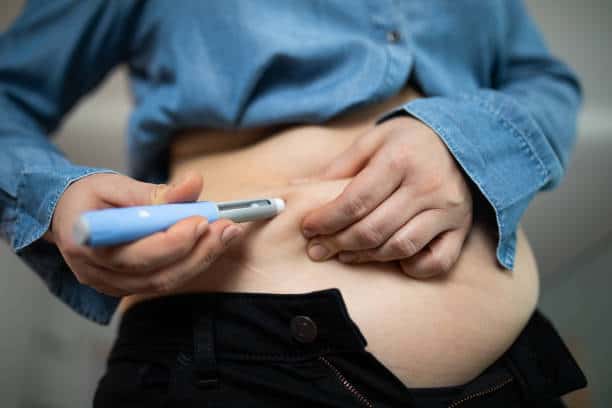
Tirzepatide attacks that root cause. By mimicking two gut hormones that regulate appetite, it drives average weight loss of around 18–20% over a year — enough to physically decompress the airway. The drug doesn’t touch your throat muscles or your brain’s breathing control; it works through the scale.
The trial numbers behind the sleep apnea approval
The approval rests on SURMOUNT-OSA, two year-long studies of roughly 470 adults with obesity and moderate-to-severe sleep apnea, published in the New England Journal of Medicine. Participants on tirzepatide dropped 25–29 breathing interruptions per hour, compared with about 5 on placebo — a reduction of 50–60%. Between four and five in ten improved enough that their sleep apnea was classified as resolved or mild by the end of the study.
One honest caveat: because the trials of tirzepatide for sleep apnea enrolled only people with obesity, we don’t know whether it helps the leaner man whose apnea comes from jaw structure or nasal anatomy. It almost certainly doesn’t — no weight to lose, no mechanism.
Who should consider tirzepatide for sleep apnea
The approved use is specific: adults with moderate-to-severe obstructive sleep apnea and obesity. If you snore heavily, wake unrefreshed, and carry significant extra weight, a sleep study plus a metabolic workup is the logical first step — not a prescription on day one.
The trade-offs are the same ones we discuss with every patient starting tirzepatide or other GLP-1 medications: nausea and digestive upset early on (see our guide to managing Ozempic and Mounjaro side effects), and the need to protect muscle while losing fat — a real risk we covered in our post on GLP-1 and muscle loss. For availability and pricing in Indonesia, our Mounjaro in Bali and Indonesia guide covers the practical side.
Does tirzepatide replace CPAP for sleep apnea?
Not for most men, and not quickly. CPAP works the first night you use it; tirzepatide takes months to move the scale and a year to show its full effect on breathing. The SURMOUNT-OSA trials actually ran both scenarios — one study in men and women who couldn’t tolerate CPAP, one in people who kept using it — and the drug helped in both.
The practical play is combination: keep the mask while the weight comes off, then repeat the sleep study and let the numbers decide. Quietly ditching CPAP in week six because the injection “should be working” is how untreated apnea sticks around.
Sleep apnea, low testosterone, and the weight-loss loop
There’s a hormonal subplot here that men’s health clinics see constantly. Fragmented sleep suppresses testosterone production, which we broke down in our post on how low testosterone and sleep interact. Low testosterone then makes it easier to gain fat, and the extra fat worsens the apnea. Round and round it goes.
It cuts the other way too: hormone therapy can aggravate untreated apnea, which is why we screen for it — details in our article on TRT and sleep apnea. Treating the breathing problem often lifts testosterone on its own, and global data suggest the majority of sleep apnea worldwide goes undiagnosed, so plenty of men are stuck in this loop without knowing it.
If the snoring, the waistline, and the 3 p.m. crashes sound familiar, Boost Health Clinic runs medically supervised weight loss programs with tirzepatide from our clinics in Jakarta and Bali — bloodwork first, honest advice on whether you’re a candidate, and follow-up that doesn’t stop at the prescription.
Need blood work? See our blood tests for men in Indonesia, available as blood tests in Bali and blood tests in Jakarta.
GLP-1 weight-loss treatment near you: Mounjaro, Ozempic and Wegovy in Bali · GLP-1 medications in Jakarta