
Prolactin and testosterone sit at opposite ends of a seesaw, and most men never think about the first one until a lab result forces them to. A raised prolactin level suppresses the brain signals that tell your testicles to make testosterone, which means a man can present with textbook low-T symptoms while the actual problem sits in the pituitary gland. It is not common. It is common enough that skipping the test is a mistake.
How prolactin and testosterone talk to each other
Prolactin is best known for milk production, but men produce it too, in small amounts, from the anterior pituitary. When levels climb, prolactin dampens the pulsatile release of GnRH from the hypothalamus. Fewer GnRH pulses means less LH and FSH from the pituitary, and less LH means the Leydig cells in the testes throttle back testosterone production.
The mechanism is not a direct poisoning of the testes. Research summarised in the Endotext chapter on hyperprolactinemia points to reduced kisspeptin signalling upstream of GnRH as the main lever. That detail matters clinically, because it explains why fixing the prolactin usually fixes the testosterone, rather than requiring lifelong replacement. The relationship between prolactin and testosterone is a chain of signals, and chains can be repaired at the point where they broke.
Scale gives you a rough sense of what you are dealing with. Normal male prolactin sits under about 20 ng/mL. Drug-induced elevations usually land somewhere between 25 and 100. Readings above 200 point strongly toward a prolactin-secreting tumour, and the number tends to track with the size of the adenoma. A man at 34 and a man at 340 are not having the same conversation, even though their symptoms can look identical from across the consultation room.
The symptoms that point at the pituitary, not the testes
Low libido, weak erections, fatigue, and a general flatness are the same complaints that bring men in for a testosterone check, so symptoms alone will not separate the two. A few features do raise suspicion. Gynecomastia. Any milky nipple discharge, which is rare but essentially diagnostic. Headaches or peripheral vision changes, which suggest a pituitary tumour pressing on the optic chiasm.
There is also a subgroup that muddies things further. A case series on idiopathic hyperprolactinemia described men with hypogonadal symptoms whose total testosterone read normal, and whose complaints only resolved once prolactin was brought down. If you have the classic signs of low testosterone but a passable lab result, this is one of the explanations worth chasing.

What actually drives prolactin up
A prolactinoma, a benign pituitary adenoma, is the classic cause and the one everyone worries about. It is far from the only one. Medications are probably the most common culprit in practice: antipsychotics, metoclopramide and domperidone for nausea, some antidepressants, opioids, and occasionally verapamil. Untreated hypothyroidism raises prolactin too, through elevated TRH, which is one of several reasons we look at the thyroid alongside the sex hormones.
Then there is the boring stuff that produces false alarms. Stress, a recent meal, nipple stimulation, vigorous exercise, and even the needle itself can nudge prolactin up transiently. A mildly elevated single reading is not a diagnosis. It is a prompt to repeat the test properly.
Chronic kidney disease belongs on the list too, since prolactin is cleared renally, as does heavy long-term opioid use, which suppresses testosterone through more than one route at once. When a man arrives on three medications that each nudge the axis, untangling prolactin and testosterone becomes less about a single villain and more about weighing which drug is doing the most damage and what can safely be swapped.
Prolactin and testosterone on TRT: what changes
Men already on testosterone replacement therapy occasionally see prolactin creep upward, and the literature includes documented cases of testosterone-associated hyperprolactinaemia. The suspected route is aromatisation: testosterone converts to estradiol, and estradiol stimulates the pituitary lactotrophs. That makes prolactin a sensible add-on when a man’s estrogen is running high or when libido drops on treatment despite good numbers.
It also matters for anyone who wants children later, since suppressed LH and FSH hit sperm production as well as testosterone. Our notes on TRT and fertility cover that side of it.
Getting the test right the first time
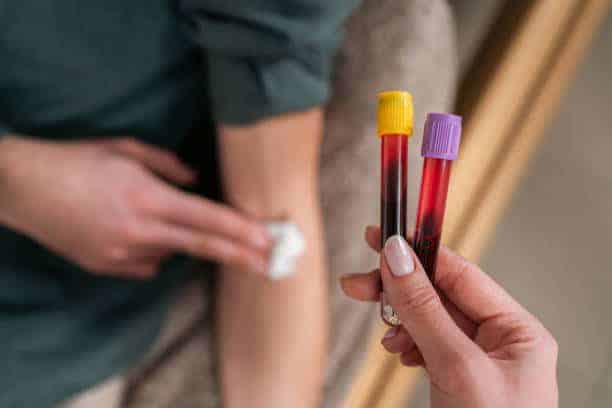
Draw it in the morning, fasted, after sitting quietly for fifteen or twenty minutes, and not after a gym session or a stressful commute. If the result comes back high, it gets repeated before anyone talks about scans. Levels only modestly above range usually trace back to a drug or a stress artefact. Levels several times the upper limit push the conversation toward pituitary imaging.
Treatment, when a real cause is found, tends to work well. Dopamine agonists such as cabergoline normalise prolactin in the large majority of cases, and testosterone typically follows on its own. Swapping a causative medication, where clinically possible, can do the same job. Our guide to testing testosterone and the clinic blood test panel cover what else belongs on the same requisition, and if libido is the main complaint, prolactin belongs there too.
What good follow-up looks like
Once a cause is addressed, we recheck prolactin and testosterone together at roughly six to eight weeks. Prolactin moves first, often within days of stopping an offending drug or starting a dopamine agonist. Testosterone lags behind it by several weeks, because the hypothalamic-pituitary axis needs time to resume normal pulsatility. Men who expect both numbers to snap back at the same visit are often disappointed for no good reason.
Symptom recovery runs on its own timetable again, usually trailing the labs. Libido tends to respond earliest, energy and mood later. If prolactin normalises and testosterone stays stubbornly low after a few months, that is a genuine finding rather than a failure, and it usually means there is a second problem sitting underneath the first one.
The practical takeaway is simple enough. Before accepting lifelong hormone replacement, make sure someone has looked at prolactin and testosterone together rather than one in isolation. Boost Health Clinic runs the full panel at our Jakarta and Bali locations, and reads it properly.
Testosterone replacement therapy near you: TRT in Bali · TRT in Jakarta