
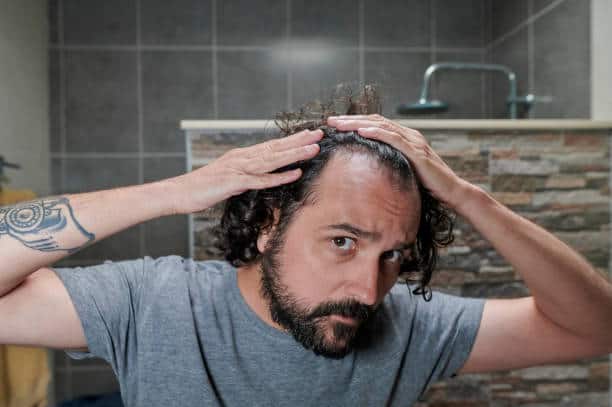
Minoxidil vs finasteride is the first real decision most men face once they stop pretending the hairline isn’t moving. The short answer: finasteride defends the hair you still have by blocking the hormone that shrinks follicles, minoxidil pushes those follicles to grow harder, and the best-studied results come from using both. The longer answer is worth five minutes, because the two drugs could hardly be more different.
How minoxidil and finasteride actually work
Male pattern baldness is a hormone problem before it’s a hair problem. An enzyme called 5-alpha-reductase converts testosterone into dihydrotestosterone, or DHT. In genetically susceptible men, DHT slowly miniaturizes scalp follicles until they produce thin, wispy hairs — and eventually nothing at all.
Finasteride, a 1 mg daily tablet, blocks that enzyme and cuts scalp DHT by roughly 60%. It goes after the cause. Minoxidil ignores hormones entirely. Born as a blood pressure drug in the 1970s, it’s now applied to the scalp as a 5% foam or solution, where it improves blood flow around the follicle and pushes resting hairs back into their active growth phase. Think of one as defense and the other as offense.
Minoxidil vs finasteride: what the numbers say
Finasteride carries the heavier evidence. In the two-year trials behind its approval for hair loss, 83% of men taking it kept or increased their hair count, against 28% on placebo. A 2017 meta-analysis in the Journal of the American Academy of Dermatology confirmed that both drugs beat placebo convincingly, with finasteride showing a particular edge at the crown and vertex. For minoxidil, the 5% strength outperforms the older 2% version in men.
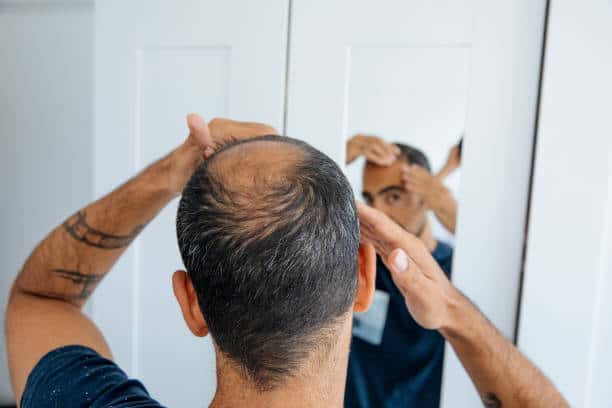
Patience matters more than brand loyalty. Both need three to six months before you see visible change, and minoxidil often triggers a shed in the first several weeks — alarming, but temporary, as old resting hairs fall out to make room for new growth. Neither drug is a cure. Stop either one and the gains typically disappear within about a year.
Side effects: minoxidil vs finasteride
Minoxidil’s problems are mostly local. An itchy or flaky scalp is the usual complaint, often caused by propylene glycol in the liquid version; the foam skips that ingredient and tends to sit better. Some men notice stray facial hair where the product migrates.
Finasteride works throughout the body, so its side effects get more attention. In clinical trials, roughly 2–4% of men reported reduced libido or erectile difficulty, and most of those cases resolved — sometimes even while staying on the drug. A small number of men report persistent symptoms after stopping, something researchers are still working to understand. The NIH’s finasteride guide also notes that pregnant women shouldn’t handle broken tablets. One practical tip from our clinic: if low libido is the thing worrying you, get your hormones checked before you blame a pill you haven’t started yet — the signs of low testosterone overlap heavily with what men fear from finasteride.
Why dermatologists often combine minoxidil and finasteride
Because the mechanisms don’t overlap, they stack. Studies comparing combination therapy against either drug alone consistently favor the combination, which is why so many hair-loss protocols start with both from day one. Mayo Clinic’s treatment overview lists them as the two proven first-line medications, with procedures layered on top for men who want more. At Boost we take the same view — our hair loss treatment program combines medication with adjuncts chosen after an in-person scalp assessment, rather than a one-size prescription.
Finasteride, DHT, and your testosterone levels
Here’s a detail that surprises people: finasteride usually nudges circulating testosterone up by 10–15%, since less of it gets converted into DHT. That bump rarely changes how you feel, but it shows how tightly hair and hormones are linked. Men on testosterone replacement therapy sometimes watch pattern loss speed up, because more testosterone means more raw material for DHT — we’ve covered exactly how TRT and hair loss interact in a separate post. If you’re starting either journey, a baseline panel that includes free and total testosterone gives you and your doctor a reference point worth far more than guesswork.
Starting minoxidil or finasteride in Jakarta and Bali
The worst strategy is waiting, since both drugs preserve hair far better than they resurrect it. If you’re noticing more scalp than you used to, book a consultation at our Jakarta hair loss clinic or our Bali location. We’ll run a blood test, look at your scalp and your hormones together, and build a plan around what your follicles actually need — not what a pharmacy shelf happens to stock.
Hair loss treatment near you: hair loss treatment in Bali · hair loss treatment in Jakarta
Related reading: Does Finasteride Lower Testosterone? What the Data Shows
This article is general information and not medical advice. All treatments mentioned require assessment by a qualified doctor.