
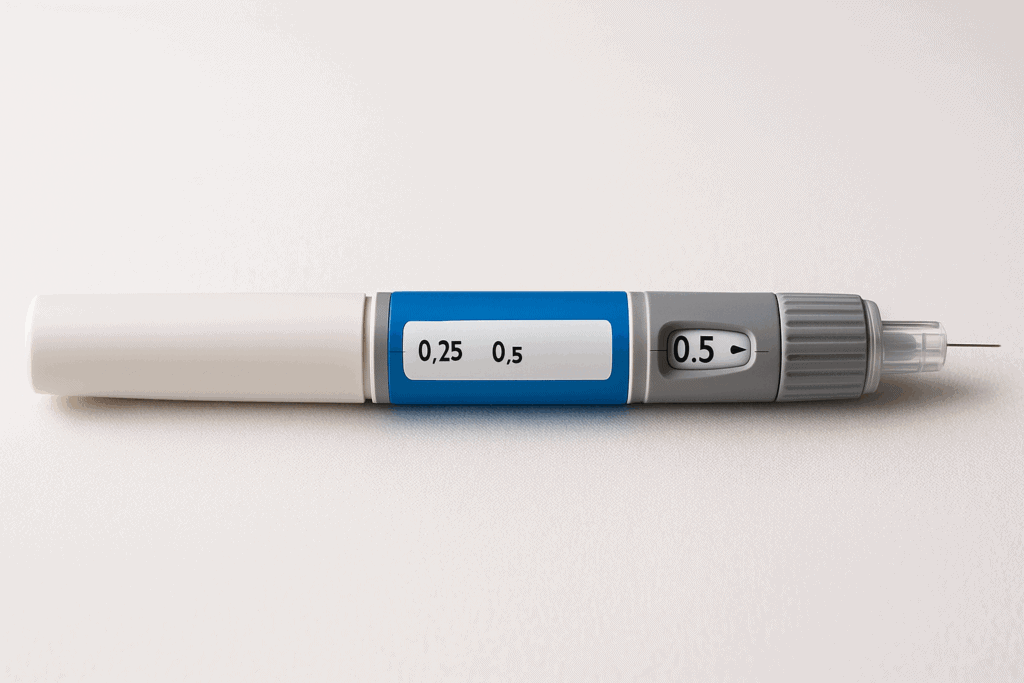
Ozempic and Mounjaro are both injectable weight-loss and diabetes medications, but they work slightly differently: Ozempic contains semaglutide (a GLP-1 drug), while Mounjaro contains tirzepatide, which acts on two hormone pathways and tends to produce greater weight loss. This guide compares how they work, their results, side effects, and how to choose.
Ozempic vs Mounjaro: the key difference
The active ingredients are what set them apart. Ozempic (semaglutide) mimics GLP-1, a hormone that curbs appetite, slows stomach emptying, and improves blood-sugar control. Mounjaro (tirzepatide) mimics GLP-1 and a second hormone, GIP — a dual action that, in head-to-head trials, has generally produced greater average weight loss than semaglutide alone. Both are weekly injections originally developed for type 2 diabetes and now widely used for weight management.
Semaglutide vs tirzepatide: results
In clinical studies, tirzepatide has tended to deliver larger reductions in body weight than semaglutide, though individual responses vary widely and both are highly effective compared with older options. The right choice is not simply “the stronger one” — it depends on your starting point, tolerance, other health conditions, and how your body responds. For how these drugs drive weight loss biologically, see how semaglutide works for weight loss.
Side effects of Ozempic and Mounjaro
Both share a similar side-effect profile, mostly gastrointestinal and usually strongest when starting or increasing the dose:
- Nausea, and sometimes vomiting
- Diarrhoea or constipation
- Reduced appetite and early fullness
- Occasional fatigue or indigestion early on
These typically ease as the body adjusts and are minimised by starting low and increasing the dose slowly. Less common but more serious risks — including pancreatitis and gallbladder issues — mean both drugs should be used under medical supervision. Tell your clinician about any personal or family history of thyroid cancer or pancreatitis before starting.
How to choose between them
The decision should be made with a clinician based on your weight-loss goals, blood sugar, tolerance, other medications, and availability. Many people start on one and adjust based on response and side effects. Crucially, these medications work best as part of a supervised programme alongside nutrition and activity — not as a standalone fix. For men, pairing weight-loss medication with testosterone optimisation can help preserve muscle while losing fat.
The bottom line
Ozempic (semaglutide) and Mounjaro (tirzepatide) are both effective GLP-1-based weight-loss medications; Mounjaro’s dual action often yields more weight loss, but the best choice is individual and should be made with a doctor. Side effects are mostly mild and gastrointestinal, and supervision matters.
At Boost Health Clinic, we provide doctor-supervised medical weight-loss programmes using GLP-1 medications. To find the right option for you, book a consultation. If you are in Bali, see how we prescribe and monitor Ozempic and Mounjaro in Bali.